Mindful Roots

Because 2047 needs conscious parents today

  • Not just Ready – Connected
    The Honest Truth About Emotional Stability Before Parenthood

    When I think about “What kind of mother will I become?” it fills me with a mix of happiness and anxiety. The happiness pushes me to work on myself, as if my entire life depends on it – because, quite literally, it does. The anxiety creeps in because, well, I tend to overthink: What if I mess it up? This was not a fleeting thought; it hung around persistently two years ago when I was newly married and just starting to imagine what embracing parenthood might look like. Today, thankfully, the anxiety has eased quite a bit, matched by an equal rise in confidence and happiness.

    Looking back over these two years, a lot has shifted within me. I have found a calmer, more resolved version of myself. But it did not happen overnight or by magic. It took deliberate effort. More importantly, I have realised something significant. Much of my own stability is rooted in the peace and growth in my relationship with my husband. It is funny how much your own emotional stability depends on the quiet moments. It relies on the give-and-take and the everyday stuff you build with your partner.

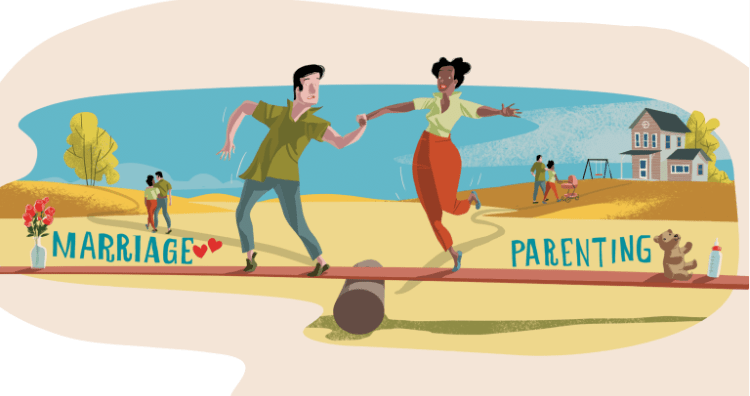
    So, this naturally leads me to the bigger question: Will we, together as a couple, make good parents? When most women think about pregnancy and preparing for a child, it is often a solitary journey in their minds. That is understandable because so much physically happens within the woman. But the truth is, good parenting starts with the quality of the relationship you and your husband share. This is not some mystical secret or hack, but something I am discovering every day in the small moments. Love and understanding are not fixed – they evolve, just like we do. And it is this evolution that builds the foundation for parenting.

    Without stretching this context further, let me share the things that have helped us understand each other better, and I hope they resonate with you. I keep coming back to two questions: What are the qualities I want to see in our child? And to cultivate those, what must I first embody? What kind of example do I want to set for our child when it comes to a healthy relationship? The qualities I envision in our children include respect, honesty, and patience. We as a couple need to build and live by these qualities first.

    One thing that has truly helped us is how we communicate. I tend to write letters, laying my thoughts on paper, while he prefers talking face-to-face. Lately, I have started adopting that too. That blend has made a huge difference. We argue sometimes, yes – but we try to do that without holding grudges or disrespecting each other. We have learned to fight in a way that brings us closer rather than pushing us apart. And honestly? Feeling safe enough to fight and stay connected feels like a huge win.

    Taking time every day to share the small moments of our day, or the big life decisions, has transformed how we relate. It is a quiet reassurance that no matter what happens, we are showing up – not just as partners, but as future parents. And for me, the best part is that all this has happened organically and not as a planned exercise.

    I will be honest; we are far from perfect. Emotional readiness is not a destination; it is a continuous journey. A journey of showing up, of grappling with unresolved anger or doubts, and learning how to let go, together. And in embracing this imperfect process, I have found a new kind of peace.

    So, if you are wondering about your own readiness for parenthood, maybe start by asking: How do you show up for your partner when it matters most? And what kind of environment, emotional quotient, and relationship do you want your child to inherit?

    Because before you nurture a child, you must build them in your relationship – and that, in itself, is the most profound preparation of all.

    Love,

    Bhavyata
  • Love & Understanding
    And why is it the most crucial prerequisite before even thinking about parenthood

    Any marriage, whether arranged or love, takes an equal amount of effort. It’s probably the most patient and consistently demanding aspect of your life. Don’t worry – this isn’t a marriage counseling session. It’s more of a reflection on the last 2.5 years of my own life.

    I always believed I had enough patience to handle any situation, good or bad. Then I realized that living with someone for the rest of your life requires an entirely different patience. And I don’t mean this negatively. In fact, it’s been one of the most fulfilling journeys to watch a relationship evolve into something so real.

    Every good thing takes time to mature. Your relationship should not feel like an adrenaline rush. It should feel like a calm, steady presence. The presence that believes in you when the world gets mean.

    You might be wondering if this is a blog or just a page from my diary filled with random thoughts. But today, I wanted to keep this piece as raw as possible. Because beyond all the noise of audience building and content strategies, writing – at its core – is a gift to communicate and express without filters. And this particular topic deserves such honesty.

    What really holds a family together

    Raising a child is one of the most private journeys a couple will ever take. Which is why, before thinking about parenthood, it’s essential to look inward, to understand the bond you share with your partner.

    Whatever exists between you two – love, tenderness, unspoken resentment, or unresolved anger – will quietly shape your child. You can’t hide energy from children; they absorb it. So, it’s better to mend the cracks early.

    The only way to deepen your bond is by being brutally honest with each other – about your fears, insecurities, habits, and expectations. Trust me, it works like magic. It builds confidence, respect, and emotional transparency, helping you see your partner beyond the outer layers and understand them for who they truly are.

    The part no one talks about when planning a baby

    When we think about “pregnancy,” we picture vitamins, workouts, doctor visits, and meditation.
    But rarely do we think about the most important part – becoming a loving, secure, and emotionally connected couple.

    Because the truth is, everything you feel for each other, consciously or not, becomes the emotional climate your child grows up in.
    Love, patience, kindness – they’re not things you teach later. They’re what you live now.

    Where parenting actually begins

    Over time, I’ve realized that nothing impacts you more than your partner. The same will be true for your child. Their sense of safety, empathy, and love will mirror the relationship they witness between their parents.

    That’s why, before planning for a child, being a loving and emotionally safe couple isn’t optional – it’s non-negotiable.

    Parenthood doesn’t start with pregnancy. It starts with partnership – with being best friends and bullet-proof teammates who choose love and respect for each other, every single day.

    Because in the end, a strong parent isn’t born the day a child arrives – it’s built in the love two people nurture long before.
    The kind of partner you are, shapes the kind of parent you’ll become. And that’s why love must always come first.

    A small note before I end

    This piece isn’t about preaching how to be good parents.
    It’s simply me putting my heart into a part of the conversation we often overlook – one that can quietly shape a child’s life in ways we can’t even imagine.

  • The DINK Debate: Freedom, Parenthood, and What We Don’t Say

    The Dilemma We are All Talking About

    Half my followers say kids are a blessing. The other half says freedom matters more. That split is not just online—it is the same conversation I hear over coffee with friends. To my surprise, the poll landed almost exactly in the middle. And yet, when I scroll, it feels like DINK is being crowned the “new cool.”

    But is it really that simple? For me, this is not about pursuing tradition blindly, nor about buying into a hashtag trend. It is about asking—are we choosing from self-awareness, or just from influence?

    The Hashtag of “Freedom”

    So here is the question I have been sitting with: Is DINK truly freedom? Or is it just another hashtag lifestyle we have glorified online?

    I am not saying couples should have kids because society expects it. That is never a good enough reason. This choice—emotional, financial, deeply personal—belongs only to you.

    But to call parenthood the end of freedom feels unfair. Isn’t it biased to bind children to just one aspect of life—responsibility—while ignoring the joy, growth, and love they bring? Would you have wanted your parents to think of you only as a burden?

    Choosing not to have kids because you know your goals, values, or readiness is one thing. But choosing it only because it feels like the easier way out—that is a short-sighted view. After all, does a child-free life guarantee that your story will always stay exciting?

    What the Narratives Do not Tell You

    Every choice comes with both sides. DINK couples enjoy travel, flexibility, and fewer financial obligations. Parents experience sleepless nights, financial stress, and the constant negotiation between self and family. Both are true.

    But here is what the narratives often miss: freedom without kids does not mean freedom from life’s hardships. Stress, aging, health issues, loneliness—these do not disappear when you skip parenthood. On the flip side, kids do not just “tie you down.” They anchor you, yes. They also expand your capacity for love and resilience in ways no solo pursuit can.

    And in India, there is another layer: women without children are often quietly—or not so quietly—considered “incomplete.” Family gatherings bring the inevitable questions. Traditions exclude them. Society treats her identity as if it is missing a piece.

    But here is the truth: a woman is not defined by her womb. Parenthood is one chapter of life, not the only measure of a fulfilled one. To reduce women to motherhood alone is not only unfair, it is insulting to the fullness of who they are.

    At the same time, dismissing parenthood as a burden strips it of its beauty. Both extremes miss the point. What is needed is a choice made with dignity—without stigma on either side.

    The Everyday Proofs We Forget

    Neither list is absolute. Both come with trade-offs. That is the point. The question is not which list looks better on paper. It is about which trade-offs you are willing to embrace with love.

    And sometimes, the beauty of that choice shines in the smallest, most unexpected moments. My nephew, for instance, is my sister-in-law’s little boy. Spending time with him opened my eyes to why so many parents call children a blessing.

    At lunchtime, he insisted I tell him stories. What amazed me was not just his attention span. It was the way his intelligent curiosity kept stretching me. He was testing the limits of my storytelling. In those giggles and questions, I saw how children push us to grow in ways we do not plan for.

    On another day, while shopping with his mom and me, he suddenly asked if I wanted to buy some jewellery. He wanted it to be a gift from him. No one in the world had asked me that before. The innocence and generosity behind that question were more priceless than any ornament.

    And then there is the simple, everyday attachment—his way of hugging, of looking at us with unfiltered love. It makes the world feel a lot better, full of hope.

    These are not grand gestures. They are not “Instagrammable milestones.” They are everyday proofs of how children add meaning that freedom alone can’t replicate.

    The Commitment That Matters

    Because at the end of the day, it’s not about being a DINK or being a parent. It is about being honest with yourself, and then building a life you can stand by with ownership and love.

    If there is one thought I will leave you with, it is this. Children are not just responsibilities. They are also mirrors. They reflect the love, patience, and growth we did not even know we had within us. That is a meaning no other “freedom” can replace.

    So yes, do not do it for the world. Do not do it for pressure. But if you choose it, choose it with love and it just might become the most liberating decision of all.

    Love,

    Bhavyata